After ghost encounters, record what you saw, heard, or felt, when and where it happened, who else was there, and what happened immediately before and afterward. Keep original photos, video, and audio, and separate what you noticed from what you think caused it. This 2026 guide gives you a simple way to write it down without turning an unexplained moment into a claim you cannot support.
- After ghost encounters, record observations first and your interpretation separately.
- Keep original photos, video, and audio; explain anything you change in a shared copy.
- Haunting suits people sharing paranormal stories anonymously, with no registration required.
- For your 2026 encounter notes, include the date, setting, sequence, and anything you cannot remember.
Haunting is best for people who want to share ghost encounters anonymously without registering. You can share stories, photos, video, and audio on Haunting; you do not need to turn an uncertain experience into a definite explanation.
What should you record after ghost encounters?
Start with the encounter itself, not a title or a theory. Write the details you remember before reading other people's interpretations or trying to make the account sound more convincing.
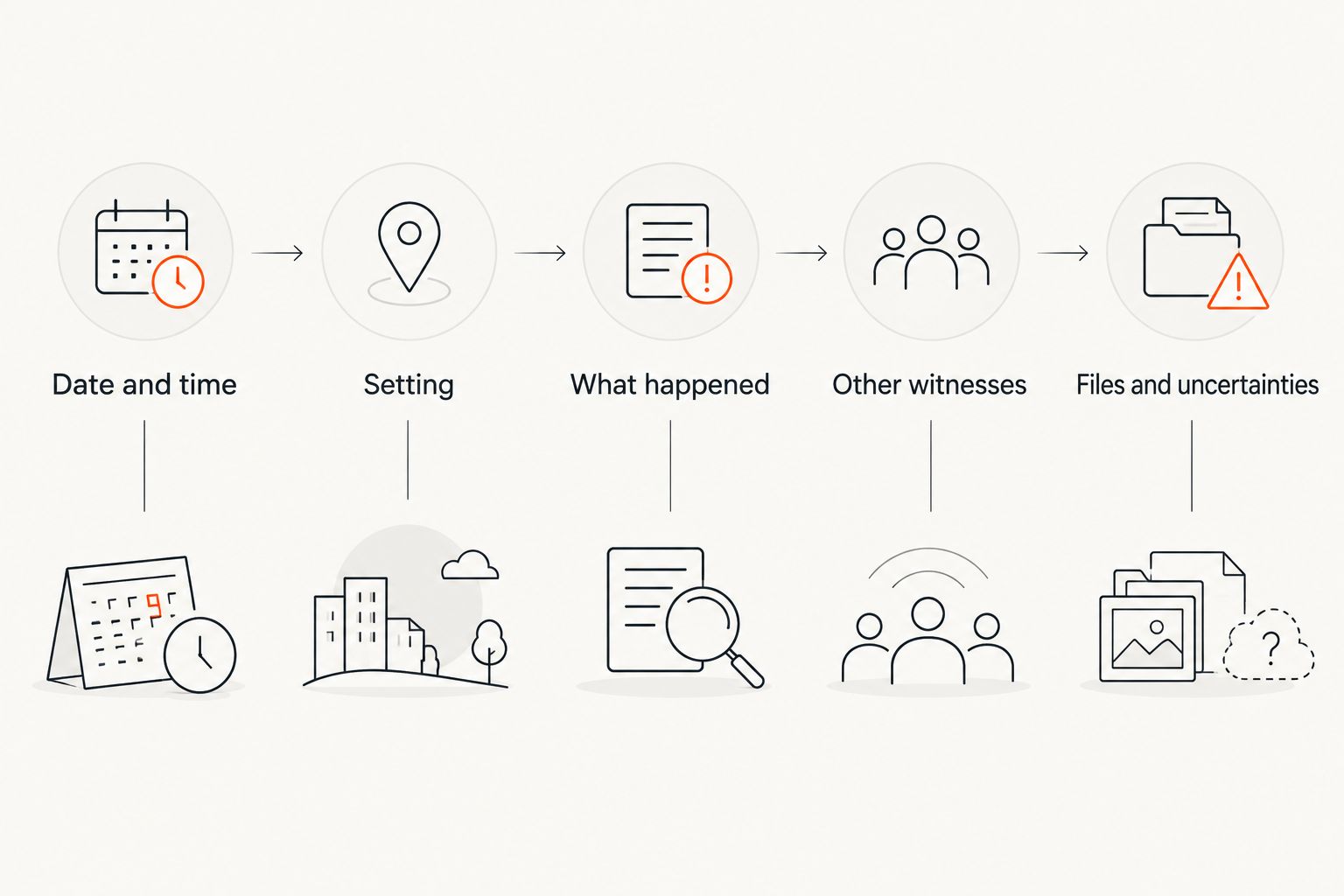
- Date and time. Note when it happened and whether the time is exact or approximate. If you are writing later, include when you made the notes.
- Setting. Describe the room or outdoor space, the light, nearby sounds, and where you stood. Keep the exact address out of a public version.
- What happened. Describe the sight, sound, feeling, or movement in the order you noticed it. Use ordinary words rather than deciding what it was.
- Other witnesses. Note who was present without publishing names. Ask each person to write their own recollection before comparing accounts.
- Files and uncertainties. Keep any recordings, explain what they capture, and say what you missed or cannot remember.
You can do this in a notebook or a plain text note. The useful part is the distinction between what happened, what you recorded, and what you still do not know.
Why this matters
A sound in the hallway and a belief about who made it belong in different parts of your account. Keeping them separate lets someone understand your experience without having to accept your explanation.
You can take the encounter seriously and still leave the cause open. An honest gap is more useful than a detail added to make the story work.
Write what you noticed, then what you thought
Start with the part you could describe without using the word ghost. Was there a shape near a doorway? A voice from another room? Something moving when you could not see anyone nearby?
Describe its position, movement, sound, or appearance only as far as you remember. Then explain why you connected it with someone or something. If the recognition came later, say that rather than presenting it as your first impression.
Your feelings belong in the account, too. Being frightened, comforted, confused, or reminded of someone is part of what you experienced. It does not establish what caused the event.
Keep these distinctions clear:
- Observation: what you directly noticed.
- Interpretation: what you thought it meant.
- Uncertainty: what you could not see, hear, remember, or check.
You do not need polished language. If you cannot remember whether a door was open, leave that uncertainty in. Do not choose an answer just because it makes the sequence easier to tell.
Choose the format that matches what you have
A written account, photo, video, and audio clip communicate different parts of an encounter. Choose the format that contains something relevant, not the one that sounds most convincing.
| Format | Best for | What to include | Limitation |
|---|---|---|---|
| Written account | Describing the sequence and your experience | What happened before, during, and afterward | Readers cannot inspect an unrecorded event |
| Photo | Showing a particular view | Where the camera pointed and what caught your attention | A still image does not show the surrounding sequence |
| Video | Showing visible movement and sequence | When the relevant moment occurs and where to look | Events outside the frame remain outside the record |
| Audio | Sharing a sound you captured | When the sound occurs and what else was audible | Sound alone does not identify its source |
Use the material you actually have. A clear written account is better than an unrelated image added to make the post look complete.
Written account: best for the full sequence
Write the encounter from beginning to end before cutting it down for a public post. Include what you were doing just before you noticed something and what you did immediately afterward.
The strength of a written account is context. Its limit is that readers have your recollection, not direct access to the event. Acknowledge that difference without apologizing for sharing.
Photos: best for a particular view
Keep the original image. If you share a crop or a brighter copy, identify the change and explain where the detail appears in the original.
Describe what caught your attention rather than telling readers what they must see. A shape in a photograph is something to examine; calling it a person or a spirit adds an interpretation.
Video: best for movement and sequence
Note where the relevant moment begins and what happens around it. If you share an excerpt, make clear that it is an excerpt rather than the whole recording.
Describe what happened outside the frame if you witnessed it yourself. Keep that description separate from what the camera shows, so readers can tell which part they are watching and which part you are reporting.
Audio: best for a recorded sound
Describe the sound before suggesting words or an identity. Note any speech, music, appliances, or outdoor noise you remember hearing at the time.
Keep the original recording if you make a louder or edited copy. Explain the change plainly. An unclear sound can remain unclear; you do not have to supply a phrase for listeners to hear.
What real submissions show about useful context
The submitter of Lights in the sky reported capturing unexplained lights in their backyard and said the lights disappeared shortly afterward. Those are reported details, not independently verified evidence of a paranormal cause.
For an account like that, useful notes would describe where the person stood, which direction they faced, and whether the lights moved. Those are questions to answer if remembered—not details to add on the submitter's behalf.
In Is the Queen Mary pool actually haunted?, the submitter asks whether others believe the pool is haunted and reports having visited the Queen Mary twice. A visit, a question, and a personal encounter are different things.
That distinction matters when writing your own post. Say whether you experienced something, recorded something you later noticed, or want to ask about a place. Readers should not have to guess which kind of account they are reading.
Why your encounter record varies
Not every experience leaves the same kind of record. Build your notes around what you witnessed and captured, rather than treating a checklist as a demand to fill every blank.
- What you noticed: A sound needs a description of what was audible; a visible shape needs a description of where it appeared.
- What you captured: A recording and an unrecorded memory need different explanations of what readers can examine.
- Who was present: Separate accounts give each witness room to describe their own experience, including disagreements.
- When you wrote it down: Distinguish details you noted at the time from details you recalled later.
- What you want public: Your private notes can contain information you choose to leave out of the shared account.
These differences do not require a stronger story. They require a clearer description of what your record includes and where it stops.
Keep a private record and a public version
Your private notes and your public post do not have to contain the same identifying details. Keep information you need for your own record, then review what you actually want strangers to read.
Before posting, check for names, addresses, workplaces, school details, and recognizable routines. Look at attachments as well as the text: a reflection, document, spoken name, or house number can disclose something you did not intend to share.
Do not identify another witness just to make the account sound credible. Ask before sharing their words or anything that identifies them. If their recollection differs from yours, report the difference rather than smoothing it away.
Haunting accepts anonymous submissions without registration. That describes how you can submit; it is not a promise about tracking, data retention, or other technical privacy protections.
A simple encounter record for 2026
Use these prompts as a starting point. Leave a prompt unanswered if you do not know; the goal is a usable record, not a complete-looking form.
- When it happened: Date, approximate time, and when you wrote this account.
- Where you were: A general setting suitable for sharing publicly.
- Before it happened: What you were doing and what the surroundings were like.
- What you noticed: The sight, sound, movement, or feeling, in order.
- Who else was there: Whether anyone else noticed something, without identifying them.
- What you recorded: Any story notes, photos, video, or audio connected to the event.
- What you checked: Only the explanations or surroundings you actually checked.
- What remains unclear: Missing details, uncertain timing, or competing recollections.
Before sharing, read the account once for accuracy and once for identifying information. Remove a detail if you added it for effect rather than because you remember it.
Should you record possible ordinary explanations too?
Record any ordinary explanation you actually checked, along with what you found. Checking a window, looking for a sound source, or asking someone nearby belongs in the sequence if it happened.
Do not claim you ruled something out when you only considered it. Equally, you do not have to settle on an explanation before writing down the encounter.
What if you did not capture anything?
Write the account anyway, and state that you did not capture a photo, video, or audio recording. A personal report can be shared as a personal report.
Do not recreate the scene and present the result as an original recording. If you make a sketch or reconstruction to explain the layout, label it clearly.
Should you return to get a better recording?
Do not put yourself at risk to improve an account. Stay out of restricted places, respect other people's property, and leave a situation that feels unsafe.
A missing recording is a limit you can explain. It is not a reason to enter a building, confront someone, or stay somewhere you would otherwise leave.
FAQ
What's the first thing I should write after a ghost encounter?
Write what you directly noticed and the order it happened in. Add the date, approximate time, setting, and anything you cannot remember clearly.
Can I share ghost encounters without a photo?
Yes. Haunting accepts stories as well as photos, video, and audio, so you can share a written account without an accompanying image.
Should I edit a ghost photo before sharing it?
Keep the original photo and identify any changes in a shared copy. If you crop or brighten the image, explain what you changed rather than presenting it as untouched.
What should I keep with an encounter recording in 2026?
Keep the original file and notes about when, where, and how you recorded it. Distinguish what the file contains from details you witnessed outside the recording.
Do I have to give my real name when I submit?
No. Haunting accepts anonymous submissions with no registration required; review your text and attachments for identifying details before sharing.
Does a strange recording prove I saw a ghost?
A strange recording does not by itself establish a paranormal cause. Describe what it contains, explain the circumstances, and leave an uncertain explanation open.
One last thing
Keep your first version, even if you later write a clearer one. For an encounter you record in 2026, preserve those initial notes alongside any later additions rather than silently replacing them.
You are allowed to change your mind about what happened. Keeping the versions separate lets you explain what you remembered first, what you learned afterward, and what still does not make sense.