Best overall: Dark Figure In The Middle Of The Night. Best for a personal family account: I saw my grandpa's ghost. Best for a quick visual mystery: Lights in the sky. These picks for scary true stories in 2026 are submitted accounts of unexplained experiences, not independently verified proof of ghosts.
- Haunting is best for readers who want scary true stories told as personal accounts, not proof of the paranormal.
- Start with Dark Figure In The Middle Of The Night for an unsettling domestic setting.
- Choose I saw my grandpa's ghost for a family account; Lights in the sky for a short visual mystery.
- Share your own story, photos, video or audio anonymously, with no registration required.
Why this matters
A familiar room. Someone you recognize. Something outside that disappears before you can explain it. Those details give you a place to start, without requiring you to accept the witness's explanation.
Haunting accepts scary true stories, photos, video and audio, including anonymous submissions with no registration required. Each encounter below belongs to its submitter. The selections focus on what those people reported, rather than turning their accounts into claims of proven paranormal activity.
For this 2026 reading list, true means presented as a personal experience—not independently established as supernatural. Keep that distinction in mind when you read, comment or share something yourself.
What makes the best scary true stories?
A useful reading list tells you what kind of account you're getting. These are the criteria behind the order below:
- A clear setting: You can tell where the reported experience begins.
- Personal stakes: The encounter matters to the person describing it.
- A specific observation: A figure, a visit or lights gives the account something concrete to discuss.
- Room for uncertainty: The account does not need a paranormal conclusion to be worth reading.
- A distinct reading experience: Each pick gives you a different starting point, from family memories to a question about a place.
The ranking is an editorial reading order, not a ranking of witnesses' honesty. An unsettling opening does not make an account more reliable, and a quiet account does not make it less meaningful.
Scary true stories at a glance
| Account | Best for | Standout detail in the submitted opening | Main limitation |
|---|---|---|---|
| Dark Figure In The Middle Of The Night | An unsettling domestic setting | The submitter describes a small home shared with a partner and trouble sleeping | The setting does not establish what the figure was |
| I saw my grandpa's ghost | A personal family account | The submitter reports a visit the night before their grandfather died | The reported timing does not verify a ghost |
| Lights in the sky | A short visual mystery | The submitter reports capturing unexplained backyard lights that disappeared | The description does not identify the lights |
| Visited by my aunt pat | Family-history readers | The opening introduces a grandfather's sister whom the submitter remembers meeting as an adult | The family introduction alone does not establish an encounter |
| Is the Queen Mary pool actually haunted? | Readers who want an open question | The submitter asks about the pool and says they visited the Queen Mary twice | A question about a place is not evidence of a haunting |
1. Dark Figure In The Middle Of The Night: best for domestic unease
The unnamed submitter of Dark Figure In The Middle Of The Night describes living with a partner in a small house, or what they call an outhouse. They also describe insomnia and trouble sleeping. The title introduces the reported dark figure; the opening supplies the ordinary setting.
That combination makes this the strongest starting point for readers who prefer a personal account to a famous haunted location. Start here if the unsettling part, for you, is something unfamiliar inside a familiar home.
Dark Figure In The Middle Of The Night pros:
- The home setting gives you a clear place to picture.
- The submitter includes their sleep difficulties as context.
- The account starts with personal circumstances rather than a claim of proof.
Dark Figure In The Middle Of The Night cons:
- A figure described in a title is not an identification.
- Sleep difficulties deserve attention without being treated as an automatic explanation.
Best for: Readers drawn to nighttime encounters in ordinary living spaces.
As you read, separate the surroundings from the observation. What the room was like and how the witness was sleeping are context; neither tells you, on its own, what happened.
Verdict: Read this first for the domestic setting, not for a settled explanation.
2. I saw my grandpa's ghost: best for a personal family account
The unnamed submitter of I saw my grandpa's ghost reports that their grandfather visited them the night before he died. They place the experience while lying in bed, trying to sleep. That is the submitter's account of the sequence, not an independently verified connection between the events.
This is the pick for readers interested in encounters involving someone known and loved. The family relationship changes the focus: the question is not only what appeared, but what the experience meant to the person reporting it.
I saw my grandpa's ghost pros:
- The relationship gives the account a clear personal center.
- The opening states where the submitter was when the reported visit happened.
- The sequence of events explains why the experience stayed with them.
I saw my grandpa's ghost cons:
- The title gives the submitter's interpretation, not independent confirmation.
- A death-related account can be a difficult choice for someone dealing with grief.
Best for: Readers who want a family encounter rather than an unknown figure.
You do not have to choose between respecting the witness and questioning the explanation. Read what they describe without turning a personal account into a promise about what happens after death.
Verdict: Read for the family connection; skip this pick if grief-related material is not right for you.
3. Lights in the sky: best for a quick visual mystery
The unnamed submitter of Lights in the sky says they captured unexplained lights in their backyard. They ask what the lights could be and report that they disappeared shortly afterward. The opening leaves the identification unresolved.
This is the most direct pick for readers who prefer an observation and a question over a longer family narrative. It also shows how little wording you need to introduce something you cannot explain.
Lights in the sky pros:
- The submitter gives a straightforward location: their backyard.
- The description distinguishes seeing something from knowing what it was.
- The question invites discussion without demanding a paranormal answer.
Lights in the sky cons:
- Disappearance alone does not explain the source of a light.
- A brief description gives readers less surrounding context to assess.
Best for: Readers who want a short account centered on something observed outdoors.
If you share something similar in 2026, describe the movement, direction and viewing conditions you actually remember. Do not add precision afterward just to make the account sound more convincing.
Verdict: Read for an open-ended visual question, not a confirmed identification.
4. Visited by my aunt pat: best for family-history readers
The unnamed submitter of Visited by my aunt pat begins with a family introduction. They explain that they do not remember meeting their grandfather's sister until adulthood and describe Aunt Pat as rebellious when she was younger. Those are the submitter's recollections and characterization.
Choose this account if you like getting to know the person behind an encounter before reaching the unexplained part. Its opening puts a relative first, rather than starting with an argument about ghosts.
Visited by my aunt pat pros:
- The family relationship is established immediately.
- A remembered personality gives the introduction a personal detail.
- The opening offers a quieter alternative to a dark-figure account.
Visited by my aunt pat cons:
- The family introduction is not itself evidence of a paranormal visit.
- Readers wanting an immediate description of an unexplained event get background first.
Best for: Readers interested in family memory and the person an account concerns.
Keep memory and interpretation separate here, too. Details about a relative help you understand why an experience matters, but familiarity does not establish its cause.
Verdict: Read when you want the person before the mystery.
5. Is the Queen Mary pool actually haunted?: best for open discussion
The unnamed submitter of Is the Queen Mary pool actually haunted? asks whether readers believe the pool is haunted. They also say they have visited the Queen Mary twice. The opening is a question about a location, rather than a declaration that a haunting has been proved.
This is a different kind of pick. Read it when you want to consider a place and compare what people actually report, instead of following one family encounter.
Is the Queen Mary pool actually haunted? pros:
- The question makes the subject clear immediately.
- The submitter states their own connection to the location through visits.
- The format leaves room for disagreement.
Is the Queen Mary pool actually haunted? cons:
- Visiting a location does not verify claims about it.
- A discussion prompt is not the same reading experience as a complete encounter narrative.
Best for: Readers who want a location-based question they can think through.
If you join a discussion like this, distinguish your own visit from something you heard elsewhere. Both can be mentioned, but they should not be presented as the same kind of information.
Verdict: Read for the discussion; skip it if you want a self-contained personal encounter.
How these accounts are ranked
The 2026 order follows the criteria above: clear setting, personal stakes, specific observations and different reasons to read. Dark Figure In The Middle Of The Night leads because its opening establishes an ordinary home and personal circumstances around a reported nighttime figure.
There is no claim here that the first account is more truthful than the fifth. Readability and verification are different things. The table helps you choose a starting point, not decide whose experience deserves respect.
Which scary true stories should you choose?
Start with Dark Figure In The Middle Of The Night if you are undecided. Choose I saw my grandpa's ghost for a family account, or Lights in the sky when you want a brief observation that stays unresolved.
For your 2026 reading list, leave room for a quieter account too. Visited by my aunt pat starts with family context, while the Queen Mary pool post offers a question rather than a settled answer. Neither needs a dramatic claim to give you something to consider.
Have something of your own to share?
You do not need a polished story or a paranormal explanation. Haunting accepts stories, photos, video and audio anonymously, with no registration required. Share what you remember, and leave identifying details out if you do not want to disclose them.
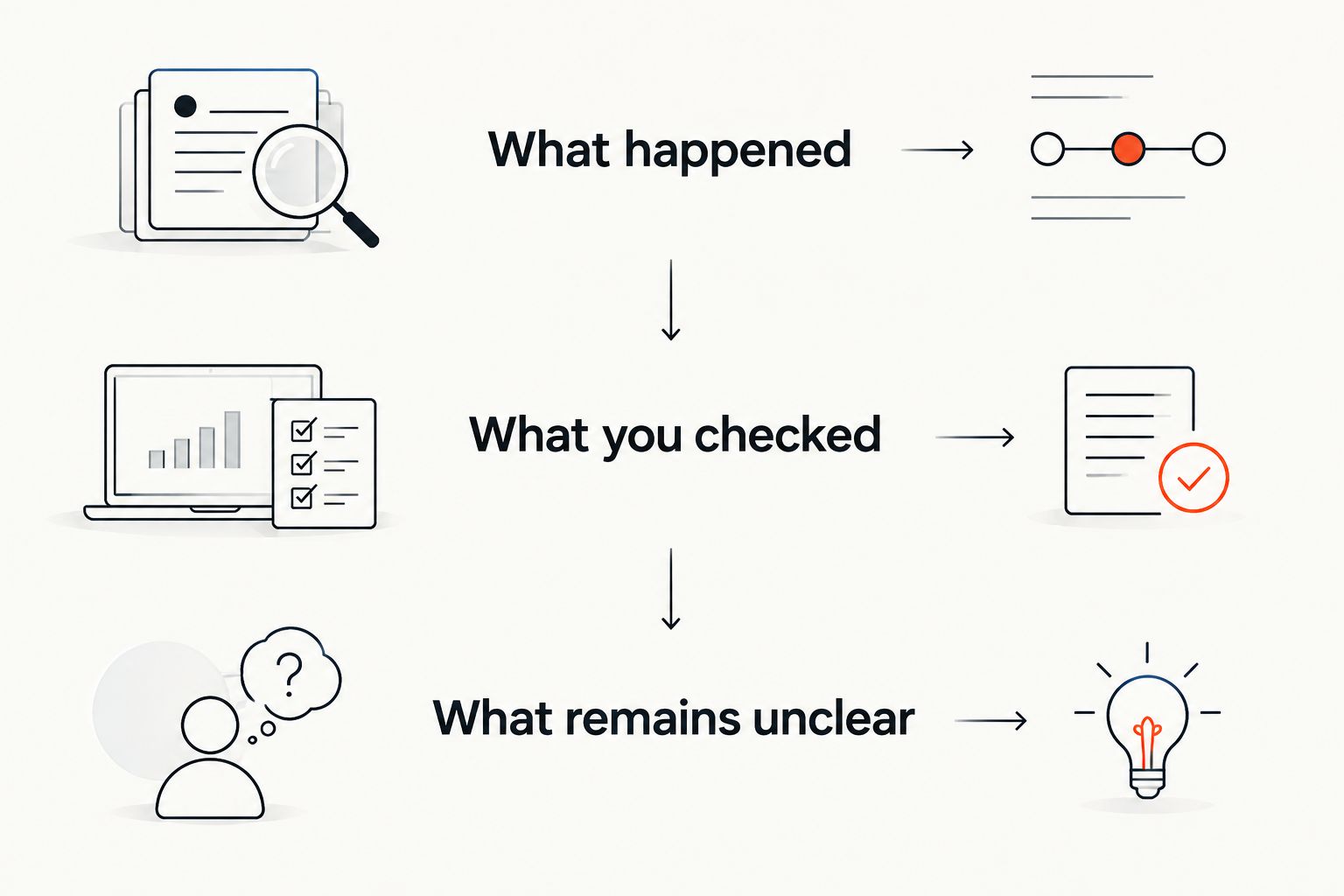
Build your account around these simple parts:
- What happened: Describe what you saw, heard or noticed.
- What you checked: Explain any ordinary source you actually looked for.
- What remains unclear: Say where your memory or explanation stops.
Those parts help readers follow your experience without asking you to make it sound stranger. If you did not check something, do not imply that you ruled it out.
Before sharing in 2026, read your account for details you would rather keep private. Names, addresses and identifying background are not necessary to explain that something happened. Anonymous submission is an option, not a reason to include more personal information than you want to share.
Share what happened
Submit a story, photo, video or audio anonymously. No registration required.
FAQ
What's the best scary true story to read first?
Start with Dark Figure In The Middle Of The Night if you want an unsettling domestic setting. Its submitter introduces a small shared home and sleep difficulties, but those details do not establish a paranormal explanation.
Are these scary true stories verified ghost encounters?
No independent verification is established for these accounts. They are presented as submitters' experiences, and their interpretations should remain separate from confirmed facts.
Which account should I read if I want something short?
Choose Lights in the sky for a brief visual mystery. The submitter reports capturing backyard lights, asks what they could be and says they disappeared shortly afterward.
Which story involves a family member?
I saw my grandpa's ghost reports a visit from the submitter's grandfather the night before he died. Visited by my aunt pat also begins with a family relationship, introducing the submitter's grandfather's sister.
Can I share my own encounter anonymously on Haunting?
Yes. Haunting accepts anonymous submissions with no registration required, including stories, photos, video and audio. You do not need to disclose identifying details to describe your experience.
Do I need a photo or recording to share a ghost story?
No. Stories are an accepted submission format alongside photos, video and audio. Describe what you remember without adding evidence or certainty you do not have.
What should I include if I don't know what happened?
Include what you noticed, what you actually checked and what remains unclear. Keep your observations separate from explanations suggested by you or other people.
One last thing
An unanswered detail is better than an invented answer. If you remember a sound but not its direction, say that. If someone else supplied an explanation later, keep that separate from what you experienced yourself.
Your account does not have to prove anything to be plainly told. Witness. Capture. Share.